 EN
EN  DE
DE  ES
ES One secrecy of Life.
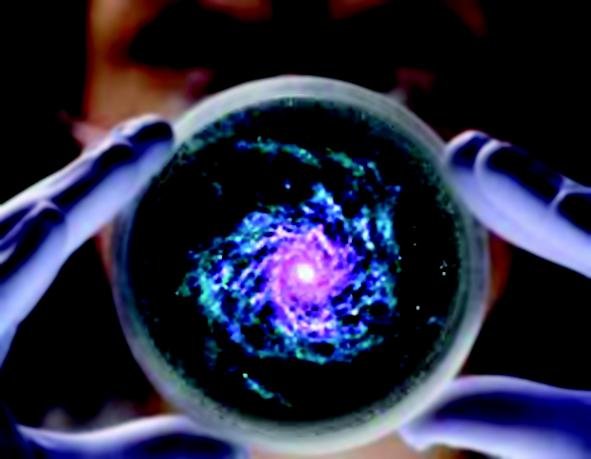 One secrecy of Life.
On one of those reflective days in 2015, it came to my mind that – maybe – during this year a baby would be born that, once as an adult, would become the first human to put his/her footprint on our neighbouring planet Mars, searching for clear evidence of life – past or present.
And then I started wondering about how life on Earth might have come about...
Definition of Life.
To find a proper definition of life is tougher than I first thought. Consulting scientific sources gave me a vast amount of definitions, but all of them were challenged by peers. So, for the objective of this small article, let's not waste too much time on this and let us accept the following simple description of life:
"Life is a dynamic process, concealed in a closed unit (cell) that transforms energy and matter via self-sustaining chemical and physical activity in order to be able to increase in biomass, to constantly interact with its environment and to reproduce itself in an autonomous way – all this together, called metabolism".
 The milestone for the concept of cybernetics started with a series of legendary meetings in New York, known as “the Macy Conference”. These meetings – and especially the first one, in 1946 – were extraordinary, stimulating and joined an exceptional group of highly creative people who collided against each other during intensive interdisciplinary dialogues about new ideas and ways of thinking. The participants divided themselves into two main groups. The first one was formed around the original cybernetics and included mathematicians, engineers and neuroscientists. The second group was formed around human scientists who were led by Gregory Bateson and Margaret Mead.
 Fuerteventura, with an area of 1.658 square kilometres, and a part of its off shore waters, have been declared in May 2009 by the UNESCO as a Biosphere Reserve. There are about 550 in the entire world, divided over 107 countries. Fuerteventura is one of the largest Biosphere Reserve in Spain and the one with the most extended marine area. This reserve represents one of the world's major geo-paleontological observatories and is home to an outstanding diversity of ecosystems and a wide variety of marine species.
 Plankton is the floating world of the oceans. And so are the creatures in this world as they do not have the possibility to swim against the tidal forces or the currents and thus are being drifted. Nobody knows where the journey will bring them. And size doesn’t matter. A human in the sea has also to be regarded as „plankton“, as he wouldn’t be able to swim against the prevailing currents. So, welcome to the world of plankton!
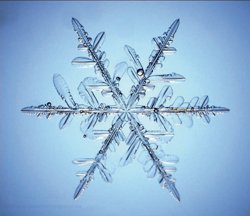 For sure, it will never snow in Fuerteventura - certainly not when our climate is said to be heating up – but that doesn’t mean we should be ignorant about what snow really is. Oh, you think it’s just frozen water, but hey there is more to it…
 There are about 350 different species and sub-species of the Sea Lavender, defined by botanists and one only can be found here on the island of Lobos, more specific in a small lagoon. The “Oval leaf Sea Lavender” is only 12 cm high and has scoop-like leaves with tiny lilac-coloured flowers. The plant lives in mangroves with seawater-moist sandy soil.
 This fascinating creature with enigmatic dark eyes and curved wings flies around all the time and even sleeps in the air. From all birds on earth the Swift is the one that is most perfectly adapted to airspace .For a bird of this size its longevity is amazing: the oldest known has just come of age – 21 years.
 Who really is interested in butterflies will certainly have noticed them on the island as they are abundant here at this time of the year. The official name is “Danaus Plexippus”.Their original habitat was South-America, but they spread out all over the world, most probably through merchant ships. The remarkable coloured wings with black stripes and borders, dotted with white points reflect, on a couple of inches wingspan, an astonishing work of art. The body also has the same pattern: black with white spots.